A winter trail has a way of making everything look simple from the parking area. Fresh snow. A clean ridge line. A little quiet. Then the temperature shifts, the route disappears under new accumulation, the daylight starts moving faster than you expected, and the outing asks a different question: did you come here to prove something, or did you come prepared to enjoy the day and return well?
That distinction is the heart of a good winter hike. The goal is not to make every cold morning an expedition. It is to make a clear plan, take the equipment you know how to use, choose terrain that fits your experience, and stay willing to turn around before a great day becomes a hard story.
In winter, good judgment is part of the gear list.
Choose the day before you choose the trail
Start with conditions, not ambition. The National Park Service recommends checking the forecast, trail conditions, and park information before setting out because winter weather can change quickly, particularly at elevation.[1] Look at the route, expected travel time, parking access, daylight, wind, and the difference between the forecast at town level and the forecast where you will actually be walking.
Match the plan to the least experienced person in the group and use a route you can confidently reverse. If the trail is covered, do not assume another set of footprints leads somewhere useful. Snow changes familiar terrain. The National Park Service specifically notes that winter routes may be unmarked or unmaintained and that following someone else's tracks can lead hikers astray.[1]
Conditions
Read the forecast, trail report, local alerts, and road access before leaving home.
Route
Choose a terrain and distance you can comfortably reverse in the available daylight.
Turnaround
Decide in advance what weather, time, energy, or footing will send you back.
Build the clothing system, not a bulky costume
Winter comfort depends on managing temperature as you move and as you stop. The American Hiking Society recommends layers that can be added or removed, including a wicking base layer and extra insulation for breaks or unexpected delays.[2] The point is to avoid getting soaked in your own effort and then chilled when the pace slows.
Think in simple roles: a layer that moves moisture, a layer that holds warmth, and a shell that handles wind or wet conditions. Add protection for hands, head, neck, and feet. Bring dry backup layers in a waterproof bag. You do not need the most expensive kit to make this work, but you do need to know what each piece does before the weather makes the choice for you.
Make traction and navigation deliberate choices
Snow and ice do not ask for confidence. They ask for appropriate footing. The National Park Service recommends traction devices on ice and snow, while American Hiking Society notes that the terrain and conditions should guide the traction or flotation equipment you use.[1] [2] A local outdoor professional or park staff member can help you understand what is appropriate for the specific trail and conditions.
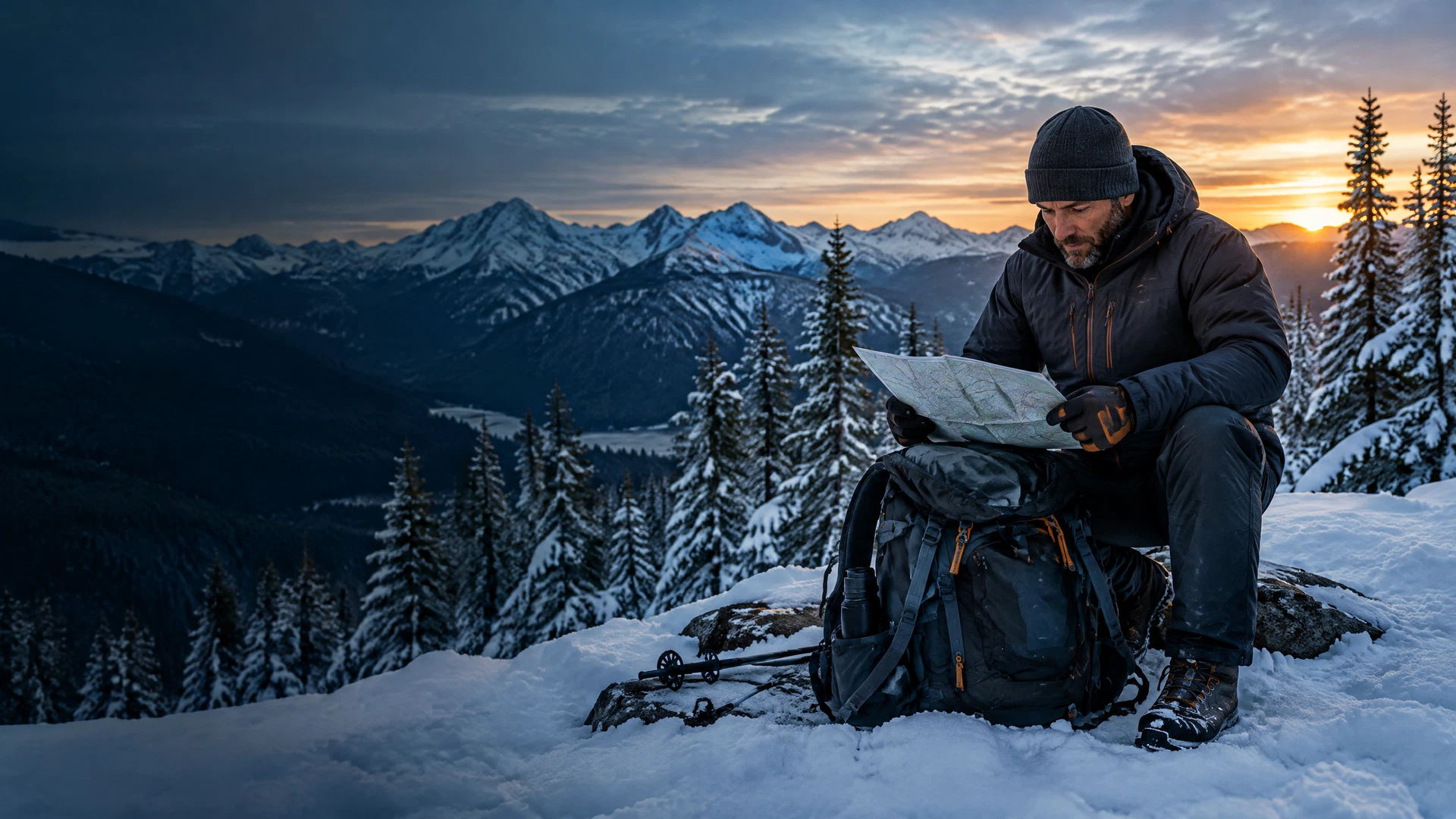
Navigation deserves the same respect. Cell coverage is not a plan. Carry a paper map and a compass or GPS, and know how to use them. The National Park Service advises hikers not to rely on a phone alone and to share their route and expected return time with someone who is not on the trip.[1] [3]
Bring water, food, a map, a way to signal, a headlamp with power to spare, appropriate footwear, warm and waterproof layers, and equipment matched to the route. Check every item before the day you need it, not from the trailhead.
Protect the margins that make the day work
In winter, small details become larger faster. Water can freeze. Batteries lose effectiveness in the cold. Daylight gets shorter. American Hiking Society recommends keeping electronics warm, carrying a light with extra batteries, sipping water regularly, and planning for earlier darkness.[2] Pack food you will actually want to eat in the cold, keep your water accessible, and leave enough time for the walk back.
Give yourself permission to choose the shorter route. A calm two-mile loop completed with good spirits is a better winter practice than a long objective that forces you to rush, guess, or ignore the conditions. Consistency is how an outdoor life gets built.
Know when the day is no longer the day you planned
The best winter hikers are not the ones who never change plans. They are the ones who notice the signal early. New wind. Lower visibility. Unfamiliar terrain. A partner getting cold. A route taking longer than expected. The National Park Service advises hikers to be willing to turn around as weather and trail conditions change.[1]
Avoid ice on streams and lakes. Treat avalanche terrain as specialized terrain that requires local information, training, and appropriate equipment. If the conditions are not what you prepared for, the correct move is to go back and choose a safer plan. The mountain will still be there.
This article is general education, not a substitute for local safety information, professional instruction, or medical advice. Stop and reassess if conditions, footing, energy, or visibility change. For a new hiking plan or a concern about your ability to participate safely, seek qualified local or health guidance.
Start with a trail that leaves room to enjoy it
Winter hiking can become one of the cleanest ways to reset your mind and reconnect with your body. The preparation is not meant to drain the romance out of it. It is what gives the experience room to be quiet, steady, and memorable.
Take the route that lets you get home with more confidence than you started with. Then build from there. The next adventure does not need to be louder. It needs to be more capable.
Suggested next read
To build the durable strength that supports time on the trail, read Working Out After 40: Build Strength for the Long Game.